The project's milestones in pictures: how far the game gets on Paleblood's own runtime, from the first recorded boot to the latest. First, the frames Paleblood's own renderer has drawn, in the order they first appeared; then the boot journey, generated from the saved boot records by tools/sync_progress.py.
Before 6 November 2026: black. The game ran its frames and flipped them
(#310), and the display showed them
(#313), but nothing drew into them. From
#369 (6 November, 07:20) the renderer was
wired into the running game, waiting for the game's drawing calls to reach it.
After the title: local runs. Frames marked local run come from the maintainer's own runs of
main with scripted input and with pull requests that were still in review applied; each caption
names them. They are not saved boot records.
6 Nov, 18:18First non-black frame6 November, 18:18 (#433): the first non-black frame. The game's compute pass clears its image to grey and its full-screen colour pass carries it to the screen; grey is the correct output of that pass. It proved the whole path: compute, the PS4's tiled image layouts, descriptors read from game memory, texture sampling, the draw and the flip.
6 Nov, 20:26First logo6 November, 20:26 (#441): the first logo. The game's own logo pass, with its indexed draws, vertex colours and a BC7 texture, drawn through the renderer.
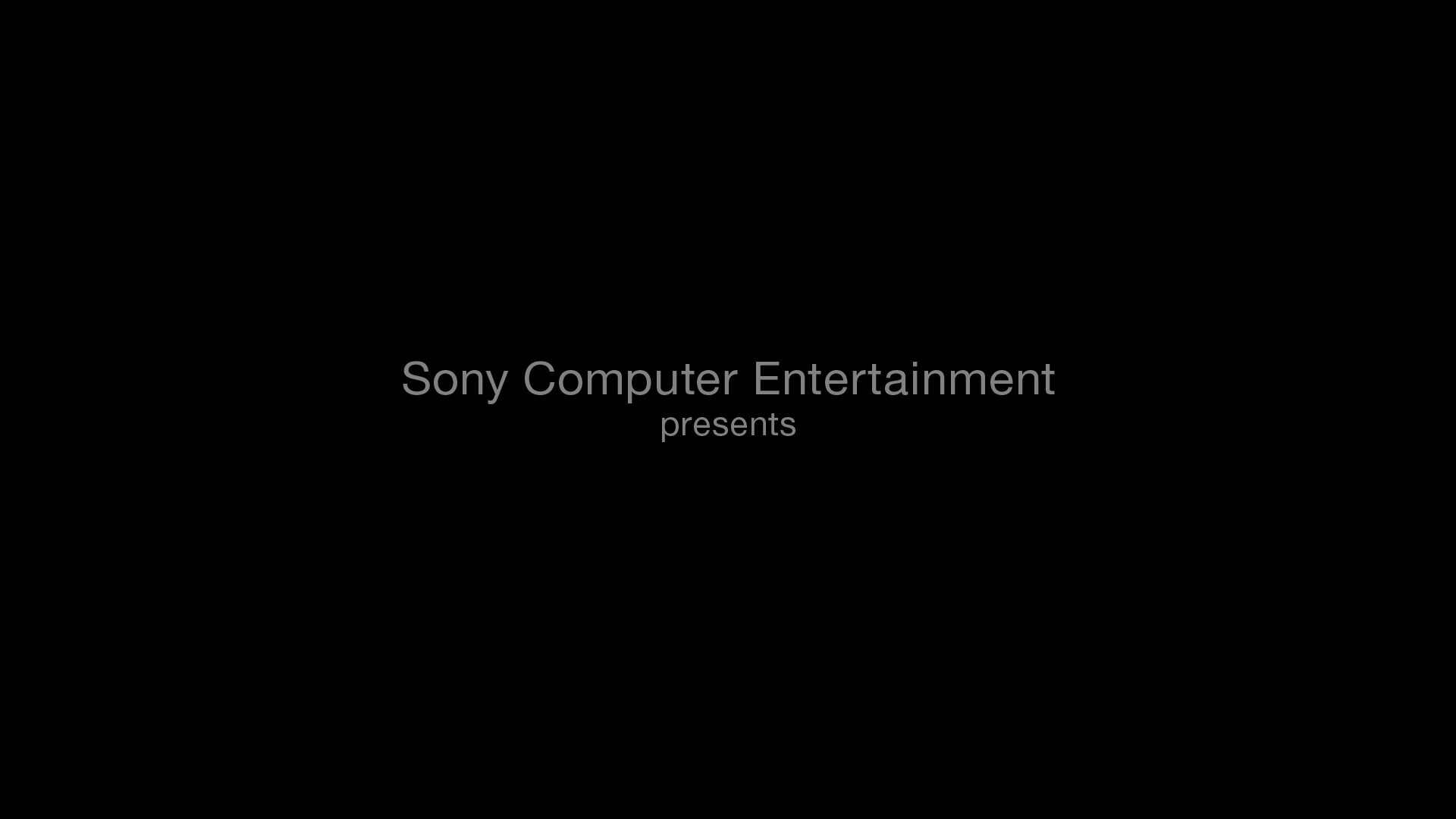
6 Nov, 20:46JAPAN Studio card6 November, 20:46 (#442): once the renderer ran about 22 times faster, the boot reached the later logos. The JAPAN Studio card matches a reference capture pixel for pixel in the maintainer's local runs.
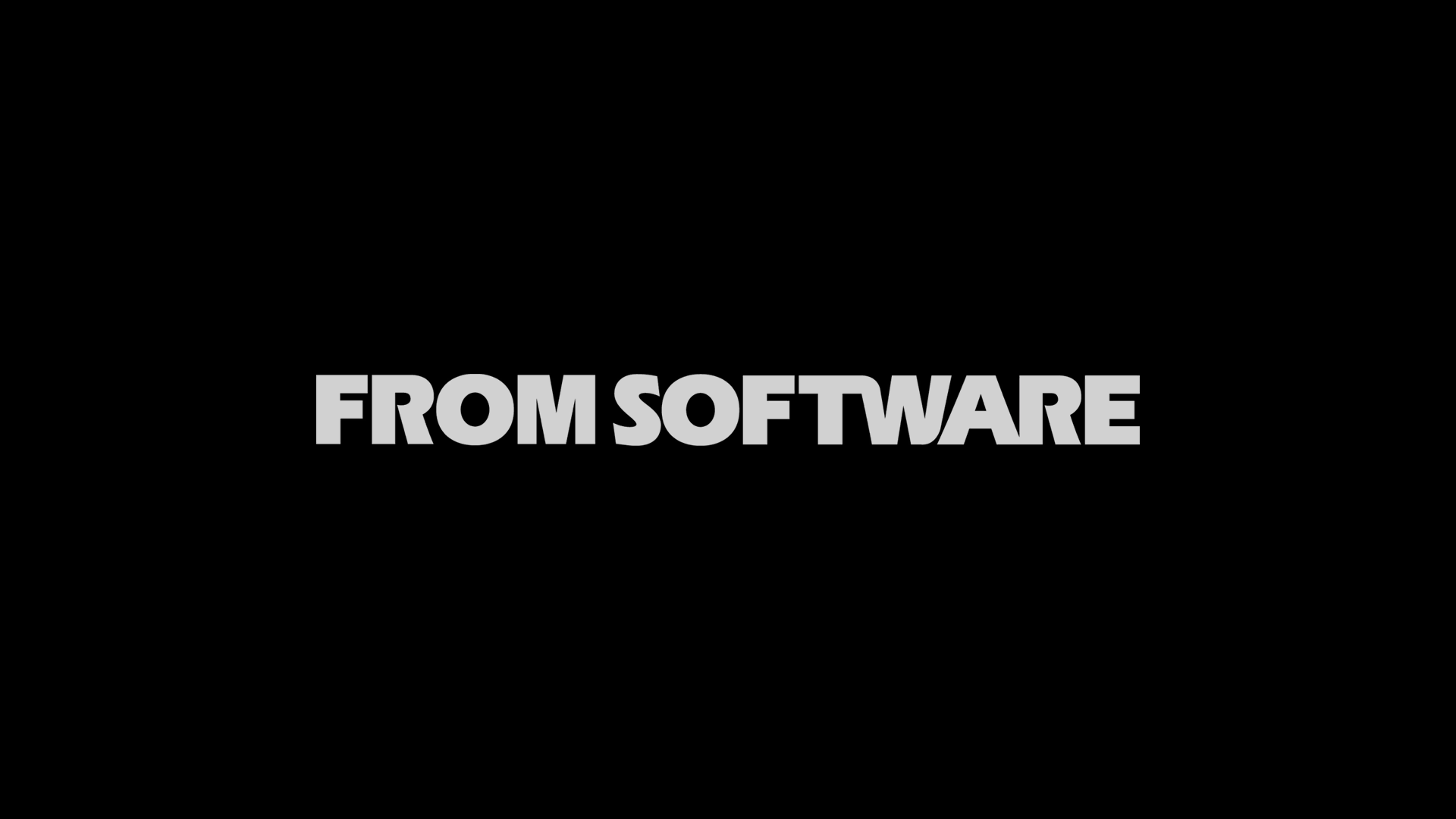
6 Nov, 20:46FROM SOFTWARE cardThe FROM SOFTWARE card, from the same runs (#442), also identical to the reference.
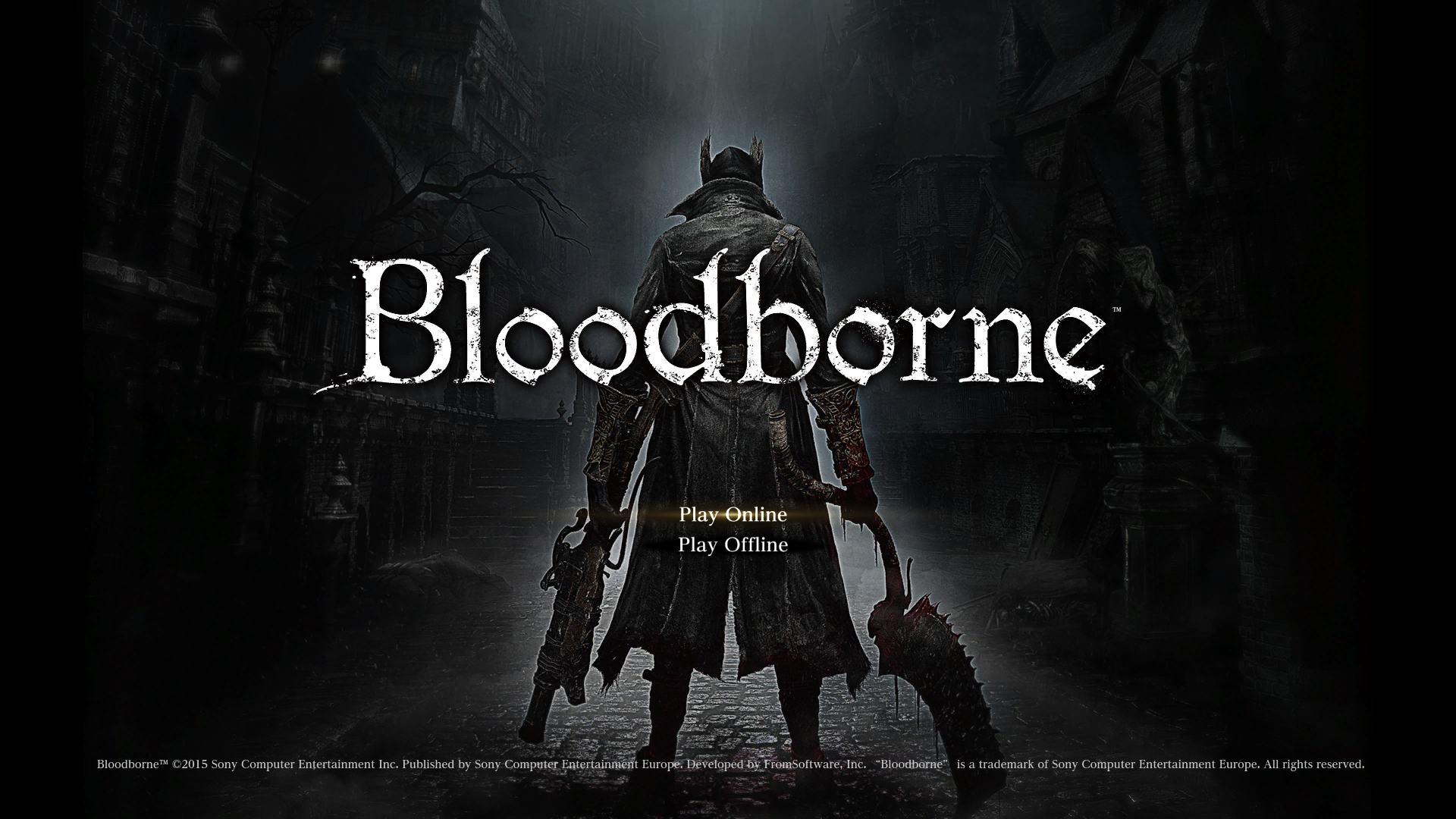
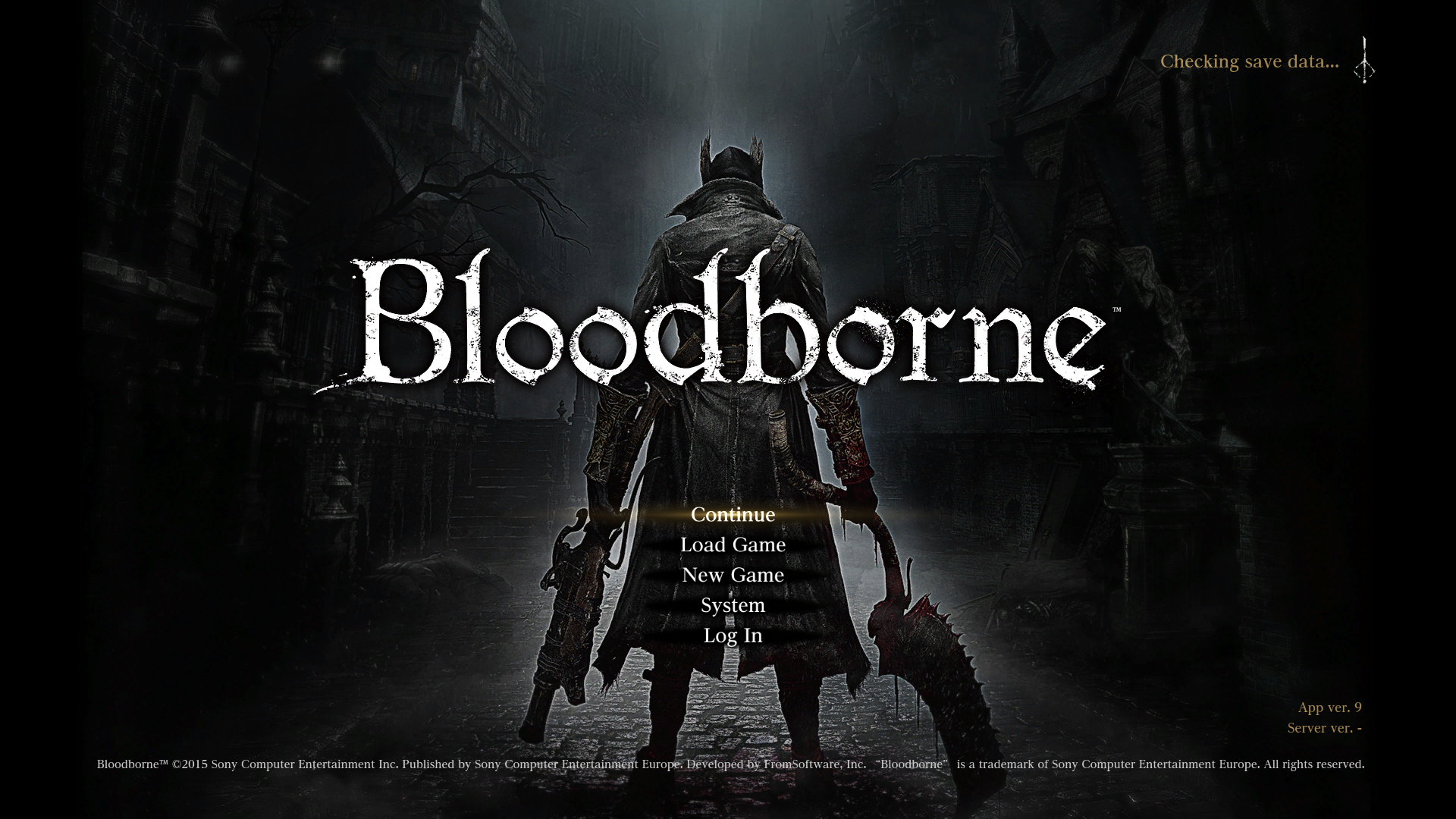
6 Nov, 20:46Title screenThe title screen, from the same runs (#442). It differs from the reference only in the animated menu highlight (0.7% of pixels).
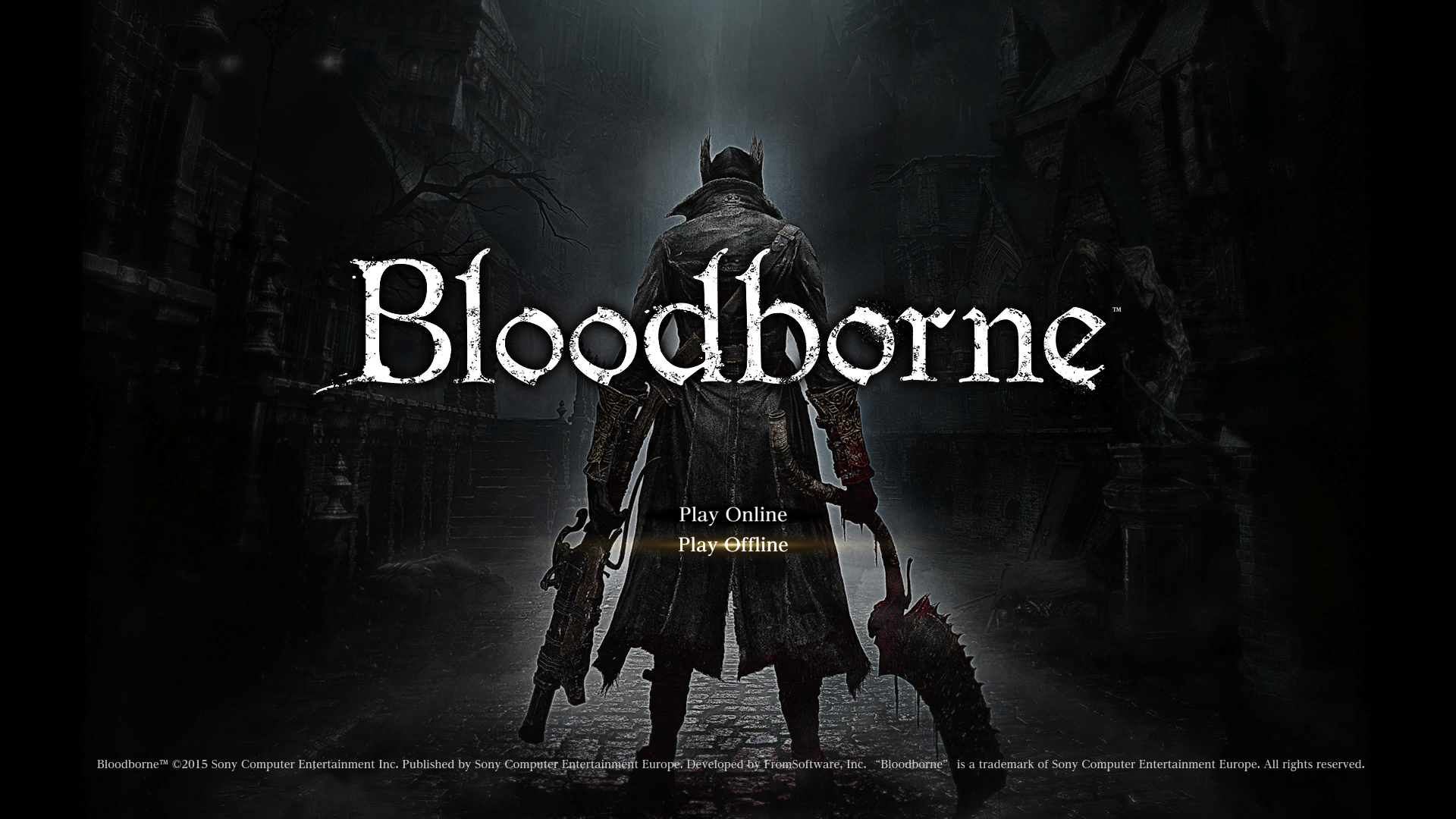
6 Nov, ~22:05Play Offline selected (local run)6 November, about 22:05 (local run): "Play Offline" selected by scripted controller input, which presses buttons on a timetable so an unattended boot can get past the title (#447, merged 22:17).
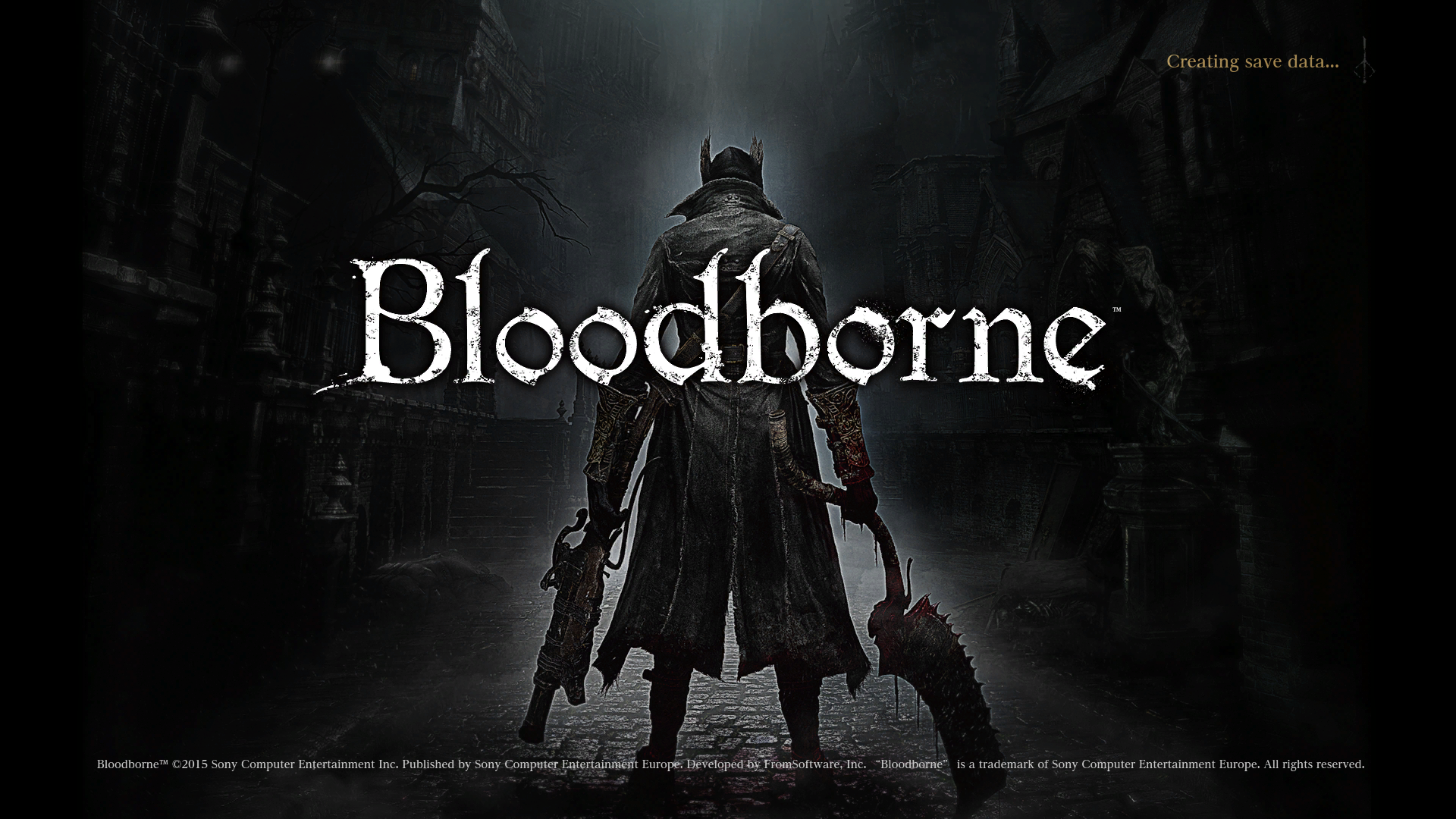
6 Nov, ~22:05Creating save data (local run)Same run: after "Play Offline" the game creates its save data, which Paleblood keeps in a host folder (#402). The file writes in this run came from #444 (sceKernelWrite and sceKernelPwrite, by @EzequielRindello), then in review and applied locally; it merged on 10 November at 08:11.
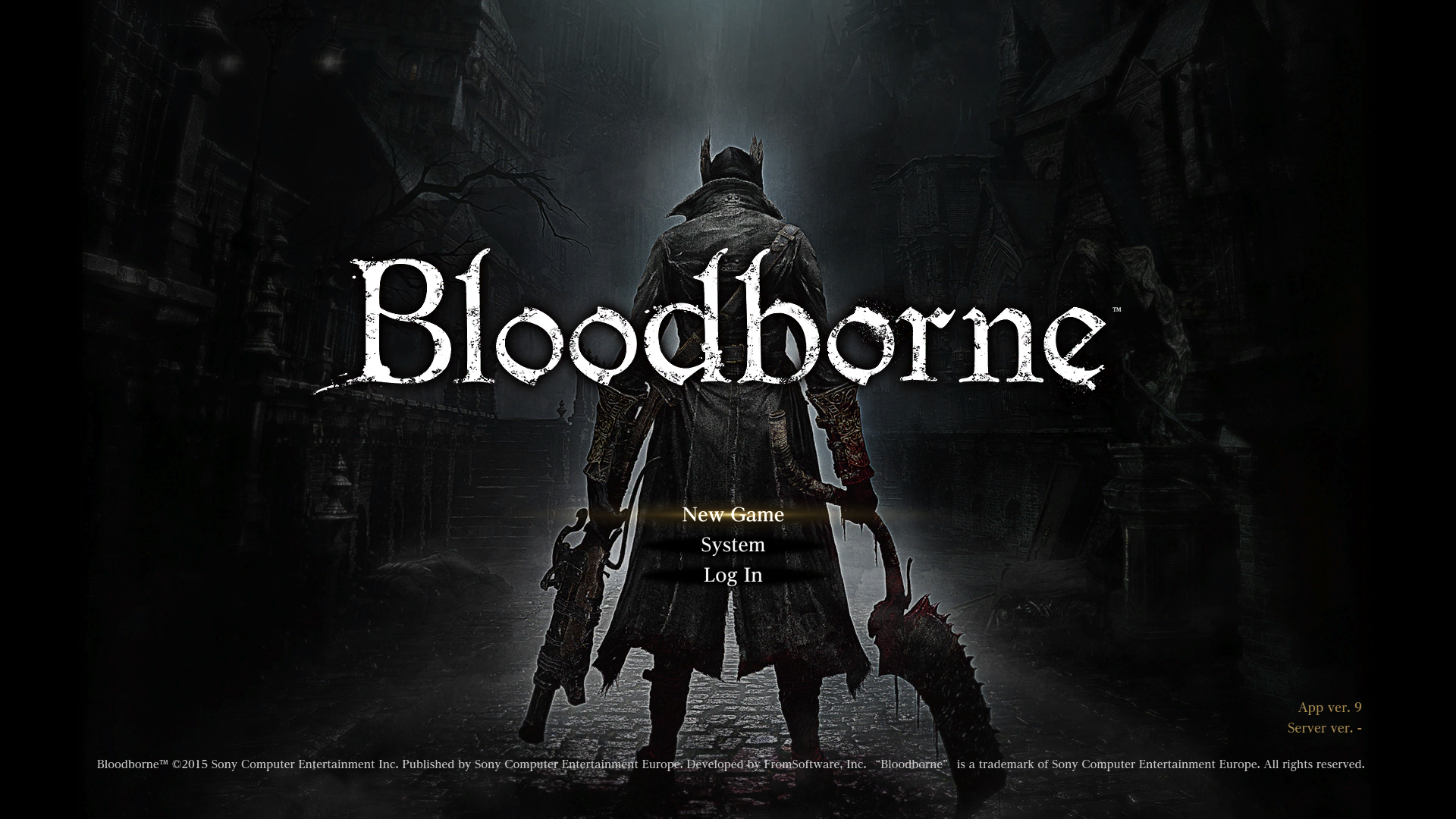
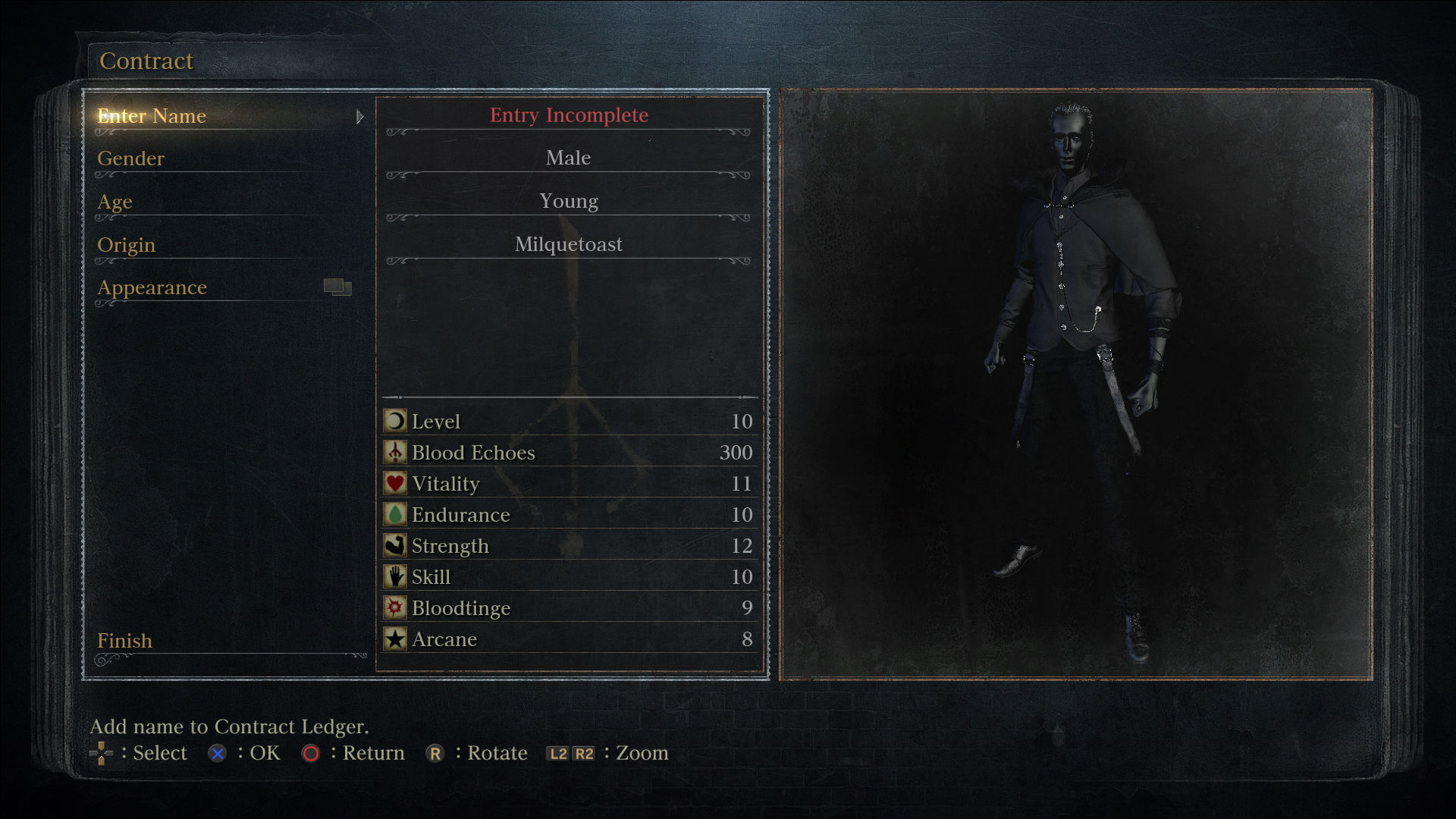
6 Nov, ~22:50Main menu (local run)6 November, about 22:50 (local run): the main menu (New Game, System, Log In). The save's next calls, sceKernelFtruncate and sceKernelRename, are answered by #449 (merged 22:39); the menu's draws needed 8- and 16-bit buffer formats, applied from the work that merged on 10 November as #457, with #444 again applied locally.
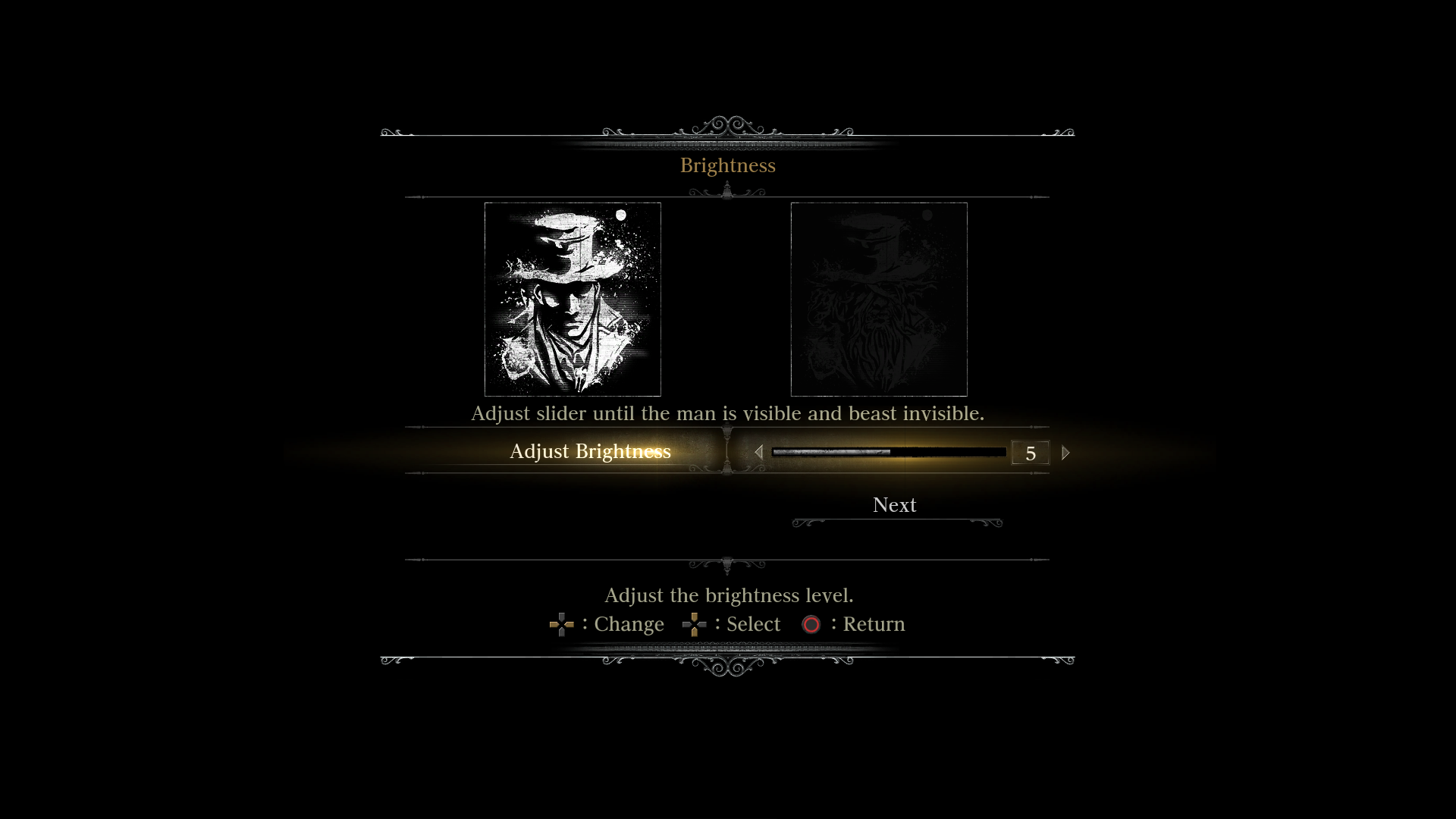
10 Nov, ~07:30Brightness screen (local run)10 November, about 07:30 (local run): after New Game, the first-run Brightness screen. The run used #457 (8- and 16-bit format buffer loads, merged 07:06) with #470 (compute queues' buffers, in review), #471 (depth and stencil tests that read the buffer, merged later at 07:59) and #444 (which merged at 08:11) applied.
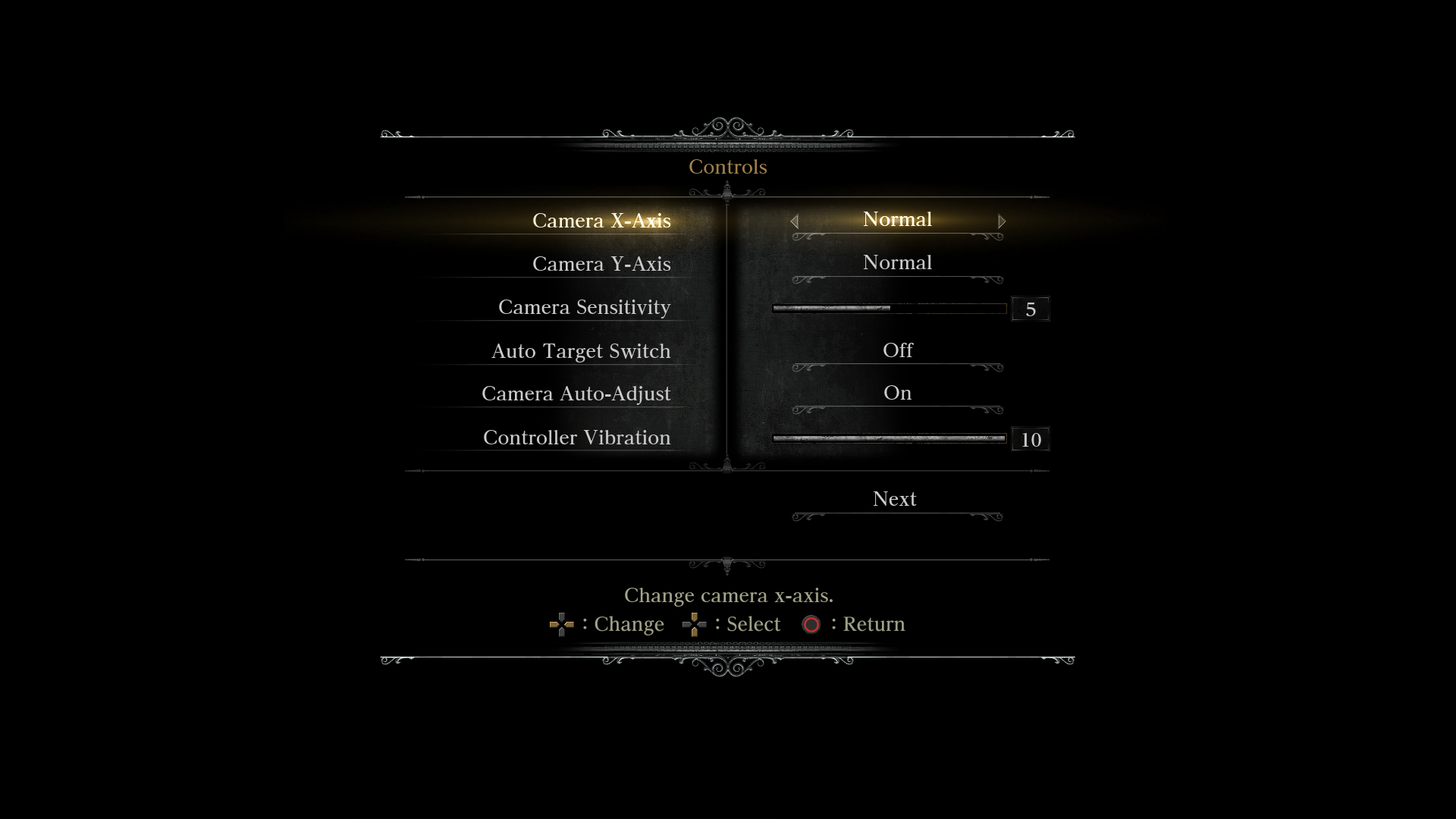
10 Nov, ~07:52Controls screen (local run)10 November, about 07:52 (local run): the next screen, Controls, on main after the 10 November runtime batch (#458 to #469), again with #470 (in review), #471 and #444 applied (both merged soon after, 07:59 and 08:11).
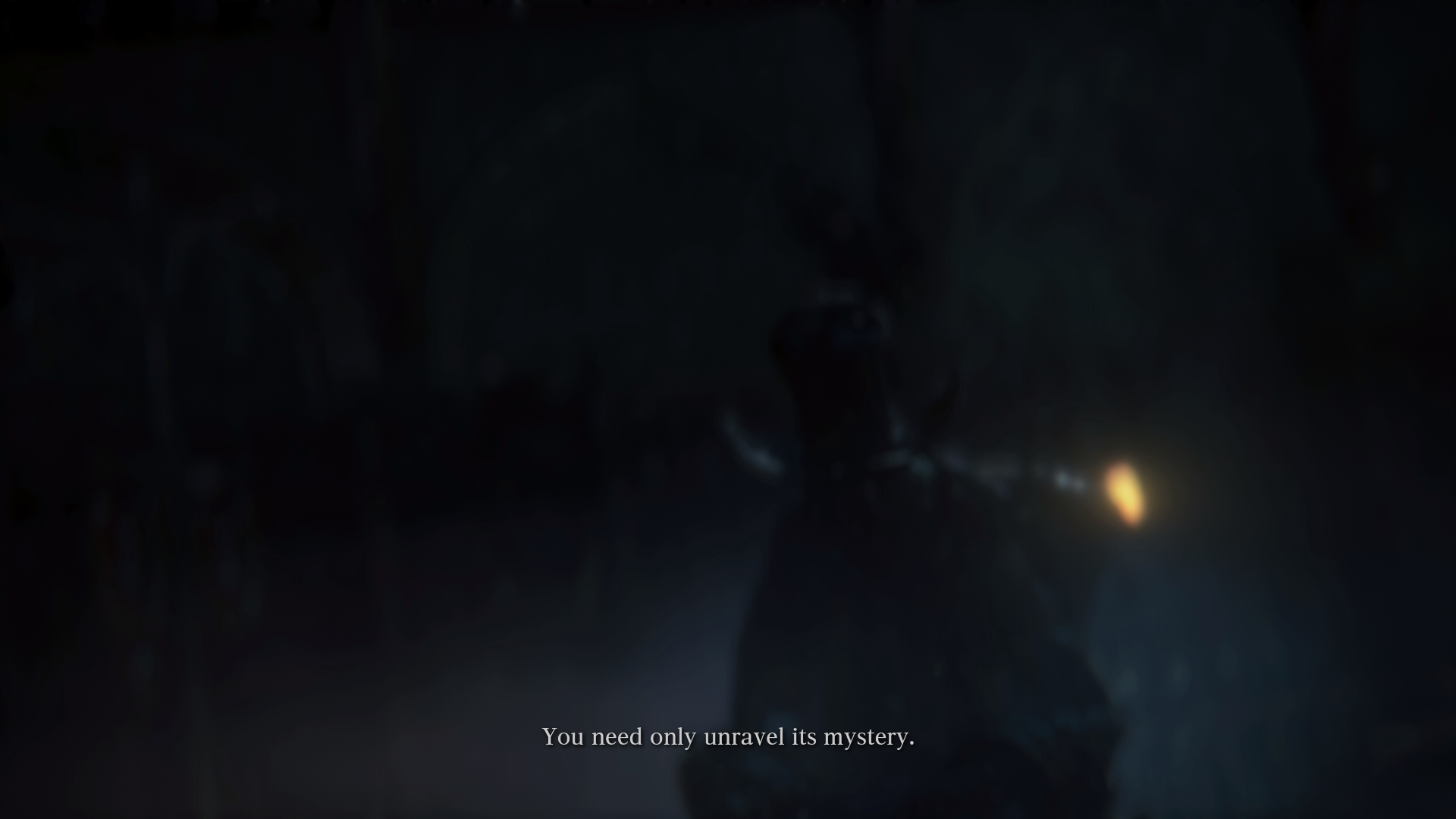
10 Nov, ~08:20First 3D scene: the opening cinematic (local run)10 November, about 08:20 (local run): past the Controls screen, the first 3D scene the renderer draws, the game's opening cinematic with its subtitle. Its draws needed image descriptors loaded behind a branch, two-channel 8-bit images and samplers with anisotropy fields, which merged later that morning as #474, #476 and #477 and were applied from review, with #470 (in review).
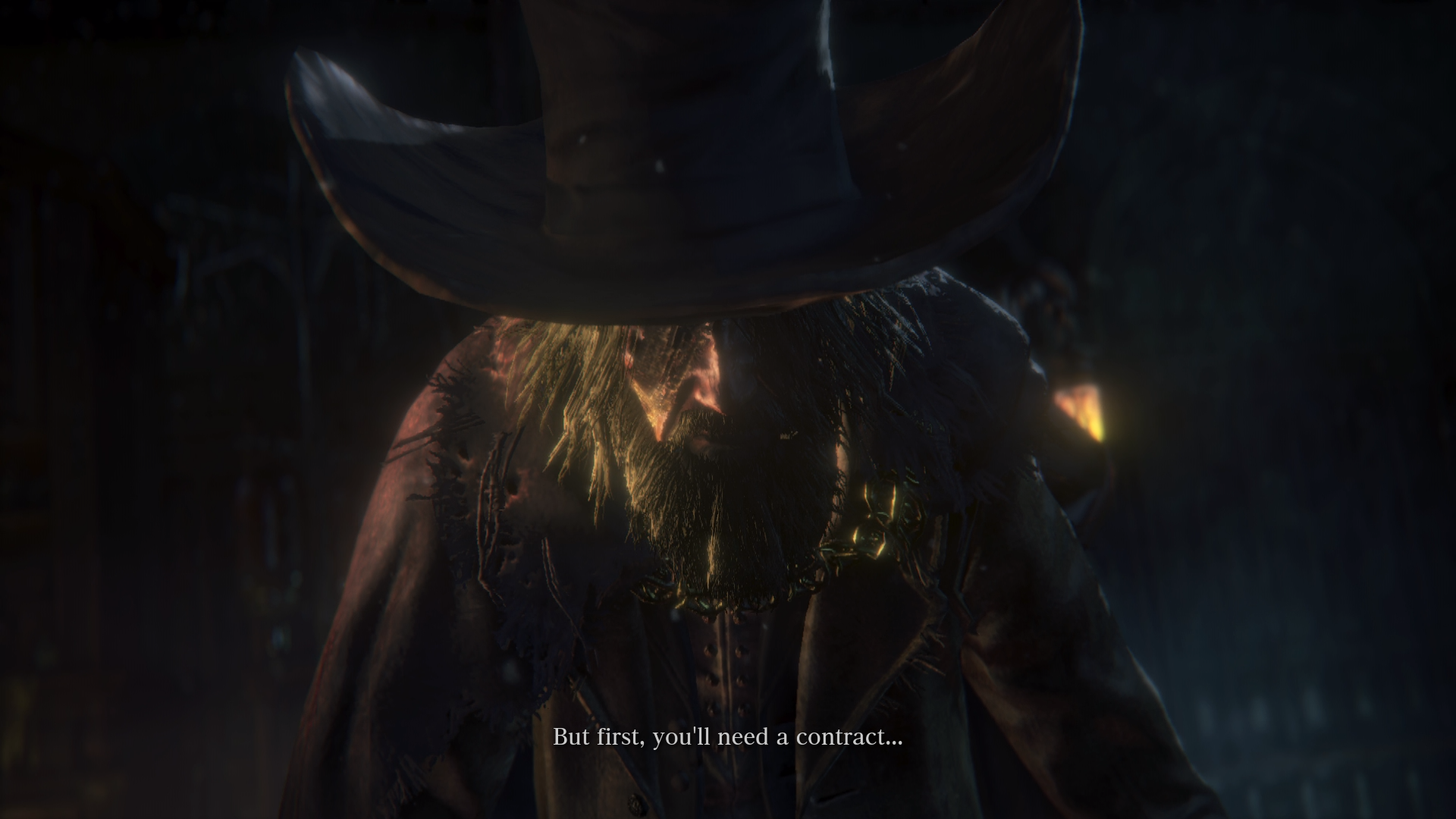
10 Nov, ~10:03The opening cinematic, lit (local run)10 November, about 10:03 (local run): further into the opening cinematic, the old man who offers the contract, drawn with his lighting, hair and lantern glow. By then the renderer recorded each buffer's work as one batch (#463) and tiled its images on the GPU (#472, which brought the logos and title to the game's 30 fps cap). Renderer work then still in review was applied; the 3D features it needed merged later that day (#494 to #540, on the Runtime page).
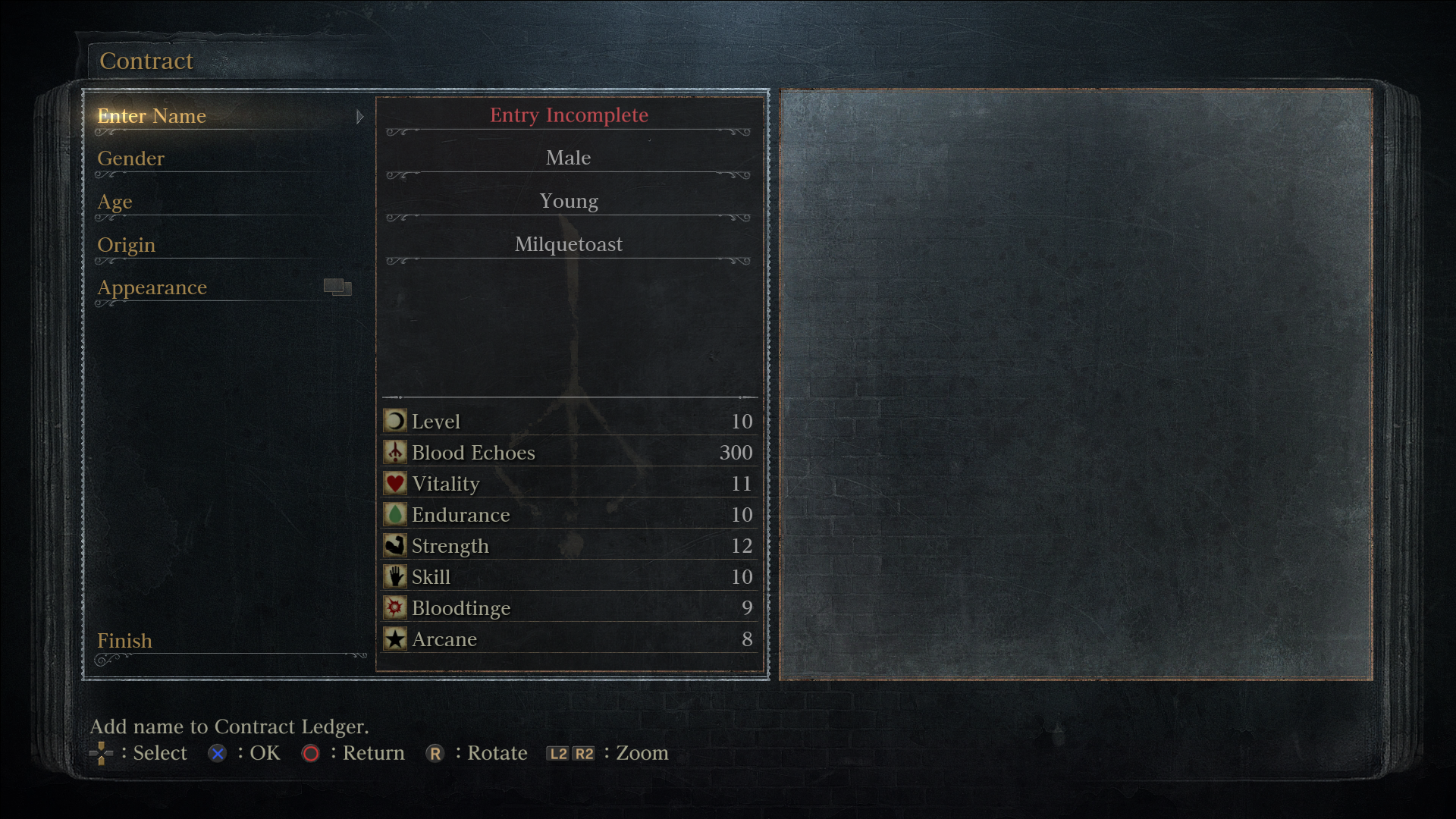
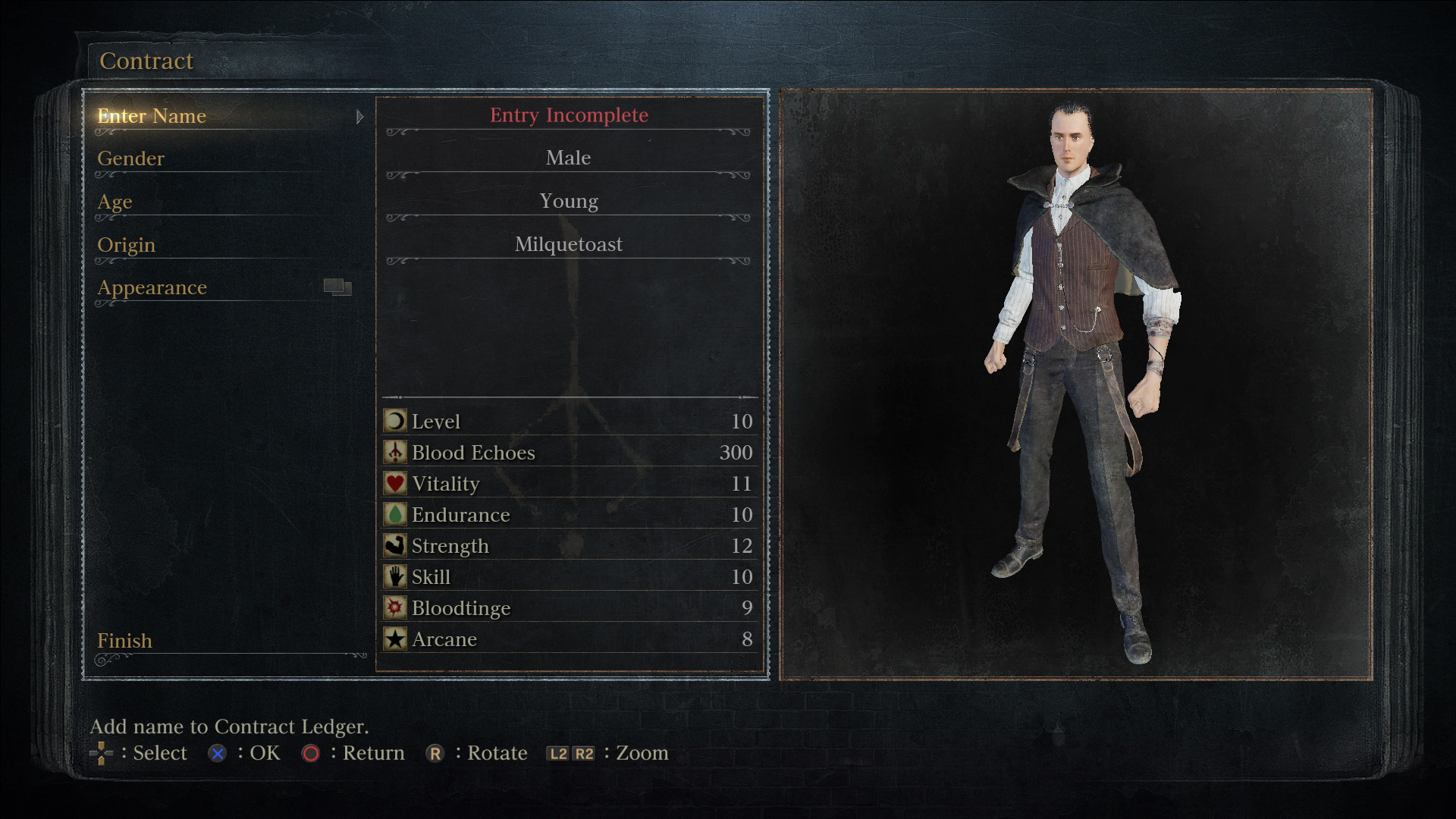
10 Nov, ~11:34Character creation (local run)10 November, about 11:34 (local run): after the cinematic, character creation, the game's contract screen, drawn in full with its menu, default choices, starting attributes and button hints. It hands the GPU 70 command buffers in one submission, which the runtime had capped at 64 (#504); renderer work then still in review was applied. The character preview on the right draws into float render targets (#534, #547, merged that evening) and is still empty here.
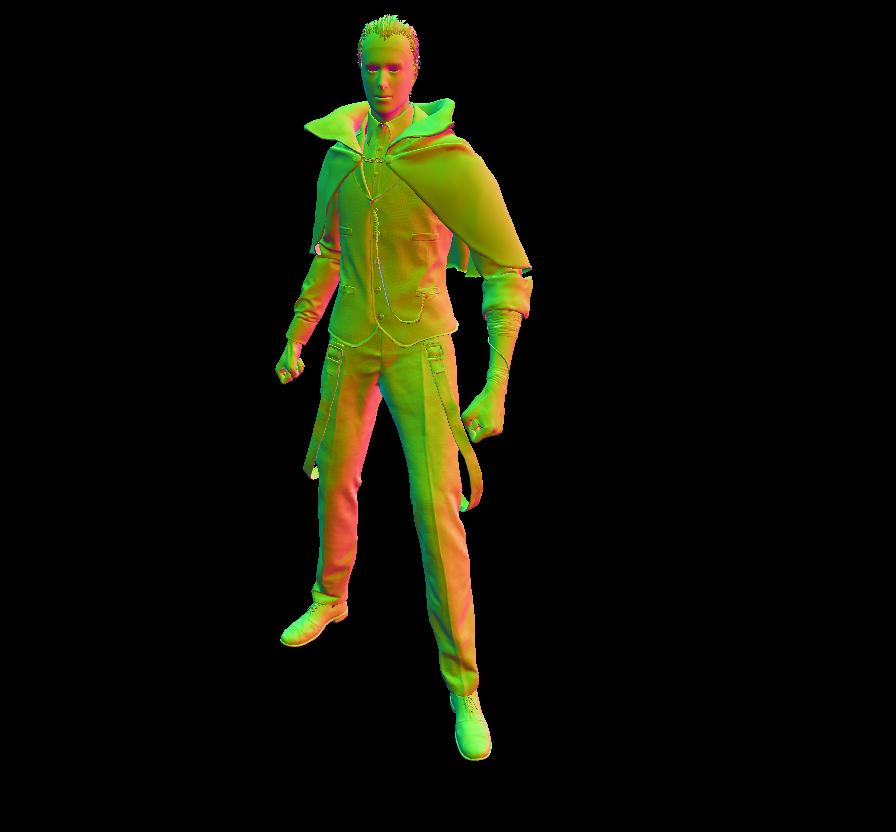
11 Nov, ~10:15The hunter's model in the G-buffer (local run)11 November, about 10:15 (local run): the default hunter of character creation's preview, drawn by the renderer for the first time. This is not the screen but one of the preview's render targets, the G-buffer slot that holds each pixel's surface direction (its normal), shown as colour, 896x832 as rendered. It drew once depth targets were fast-cleared through HTILE (#593, merged 10:04); on screen the preview was still black, because its lighting pass added nothing yet.
11 Nov, ~12:09The preview, lit for the first time (local run)11 November, about 12:09 (local run): the preview lit for the first time. Its lighting pass reads the scene's depth through a copy in memory, so depth targets are now written back (#599, merged 12:12), and it reads what the GPU's compute queues make, so their work now runs (#606, merged 17:10) with the image kinds it needs (#600, merged 12:35); all three were applied from review. The colours are still wrong: only the specular light reached the hunter.
11 Nov, ~17:33The preview in the right colours (local run)11 November, about 17:33 (local run): the hunter in the right colours. The draw that combines the light with the albedo read its texture coordinates from the wrong vertex output, so it sampled them upside down at half size; pixel shader inputs now follow the GPU's SPI_PS_INPUT_CNTL registers (#607, merged 17:35). The face's texture is written by a compute shader and was black until its stores reached memory: #609, applied from review (merged 18:01). The screen runs at about 9 frames a second.
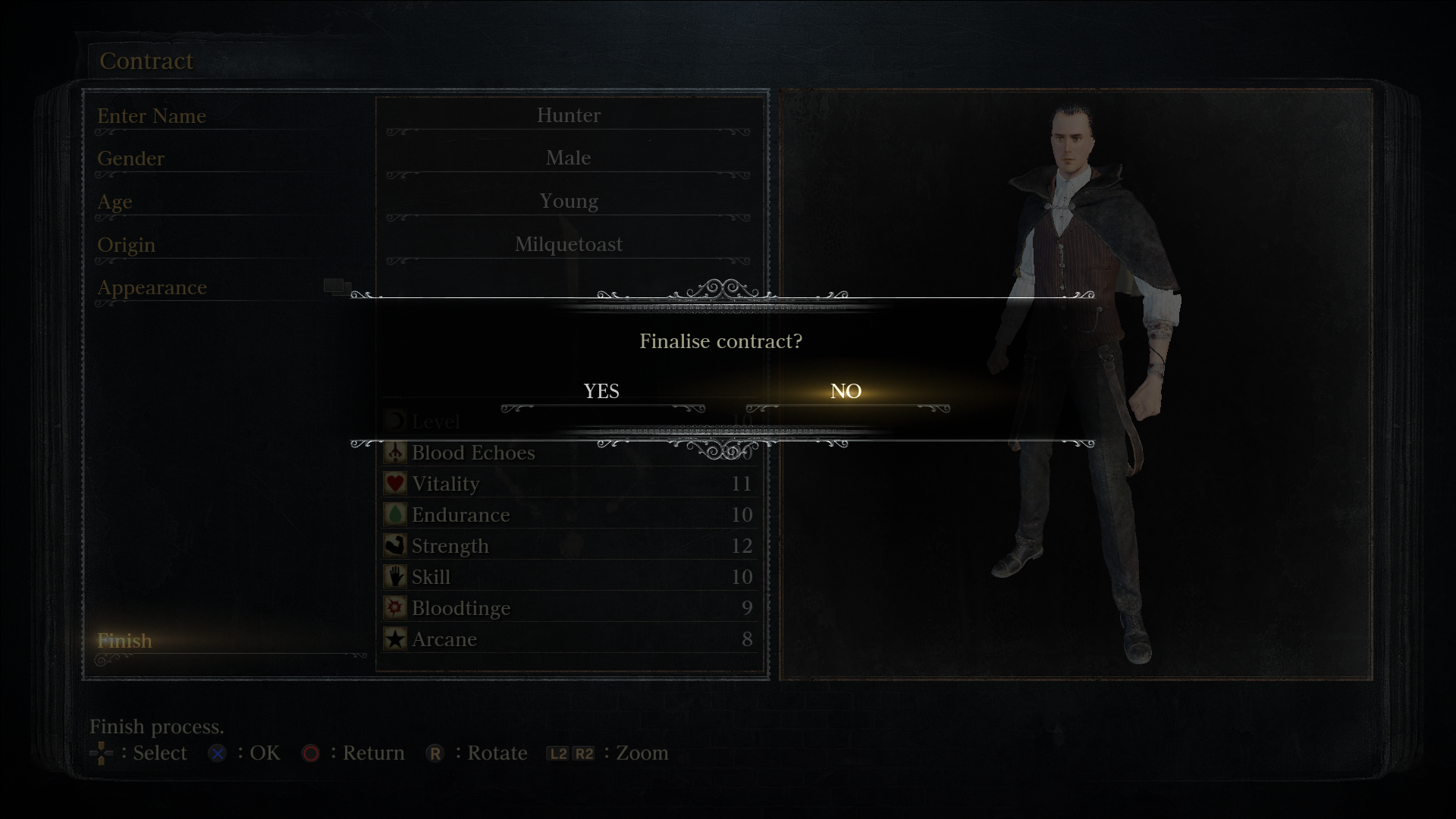
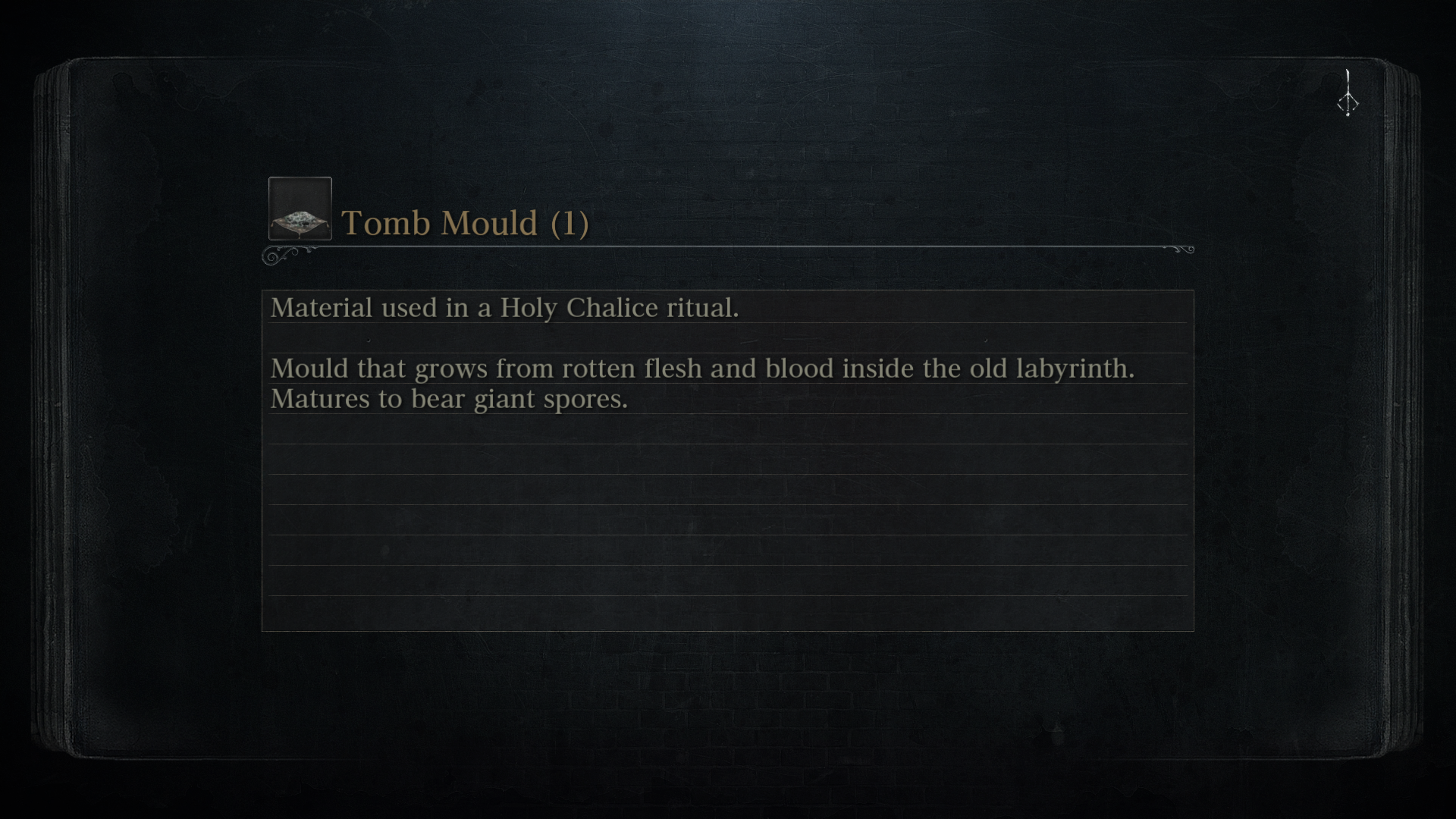
11 Nov, ~19:37The contract named and finalised (local run)11 November, about 19:37 (local run): the contract carries a name, "Hunter", and Finish asks "Finalise contract?". The game will not finish a contract without a name, and the runtime's on-screen keyboard was always cancelled; with --keyboard-text it now answers as if the name was typed and confirmed (#619, applied from review, merged 20:02). Scripted input then chose Finish and YES.
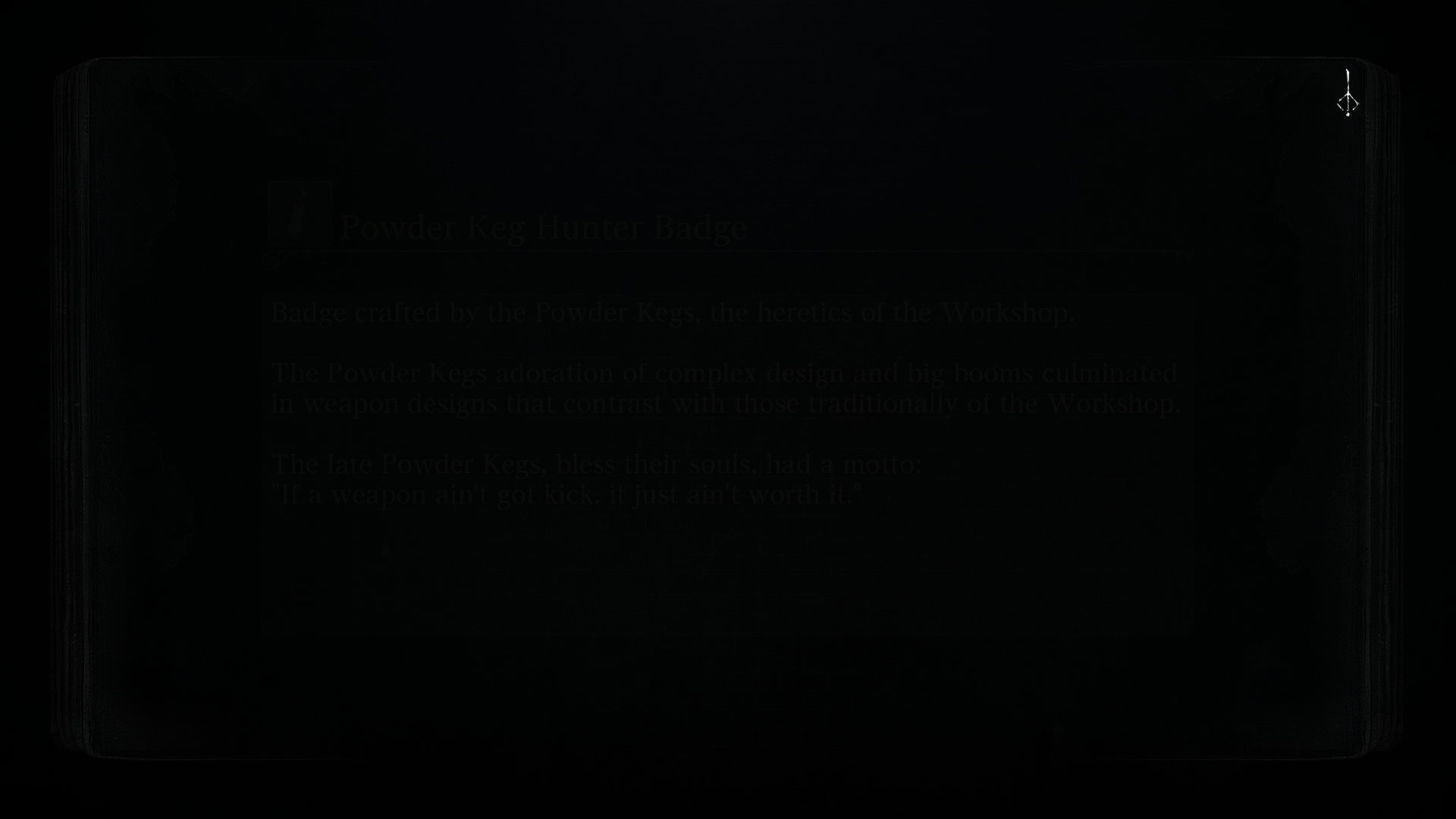
11 Nov, ~19:38The loading screen after the contract (local run)Same run, a few seconds later: the loading screen after the contract fades in, with one of the game's item descriptions. Its work then stopped by name on a 16_16 float buffer store; that and the next stops became #621, #622, #624, #626 to #628, #631 to #635, #638, #639 and #644, merged on 11 and 12 November.
12 Nov, ~02:49Continue, from the game's own save (local run)12 November, about 02:49 (local run): the title offers Continue. The game autosaves once the contract is finalised, and this boot started from a copy of that save (#641, applied from review, merged 03:12), so it goes straight on into the load of Iosefka's Clinic instead of replaying the title, character creation and the contract. That load then needed #643, #645, #647, #649, #653 and #654; it stops next at tessellation (#655).
12 Nov, ~13:46On the way into the clinic (local run)12 November, about 13:46 (local run): the loading screen on the way into Iosefka's Clinic, after Continue from the game's own save, with one of the game's item descriptions. Tessellated and geometry-shader draws had merged that morning (#663, #669), and translator pull requests then in review were applied (among #684 to #712, all merged later that day). The load did not finish in this run: the GPU hung under the game's work (see the next frames).
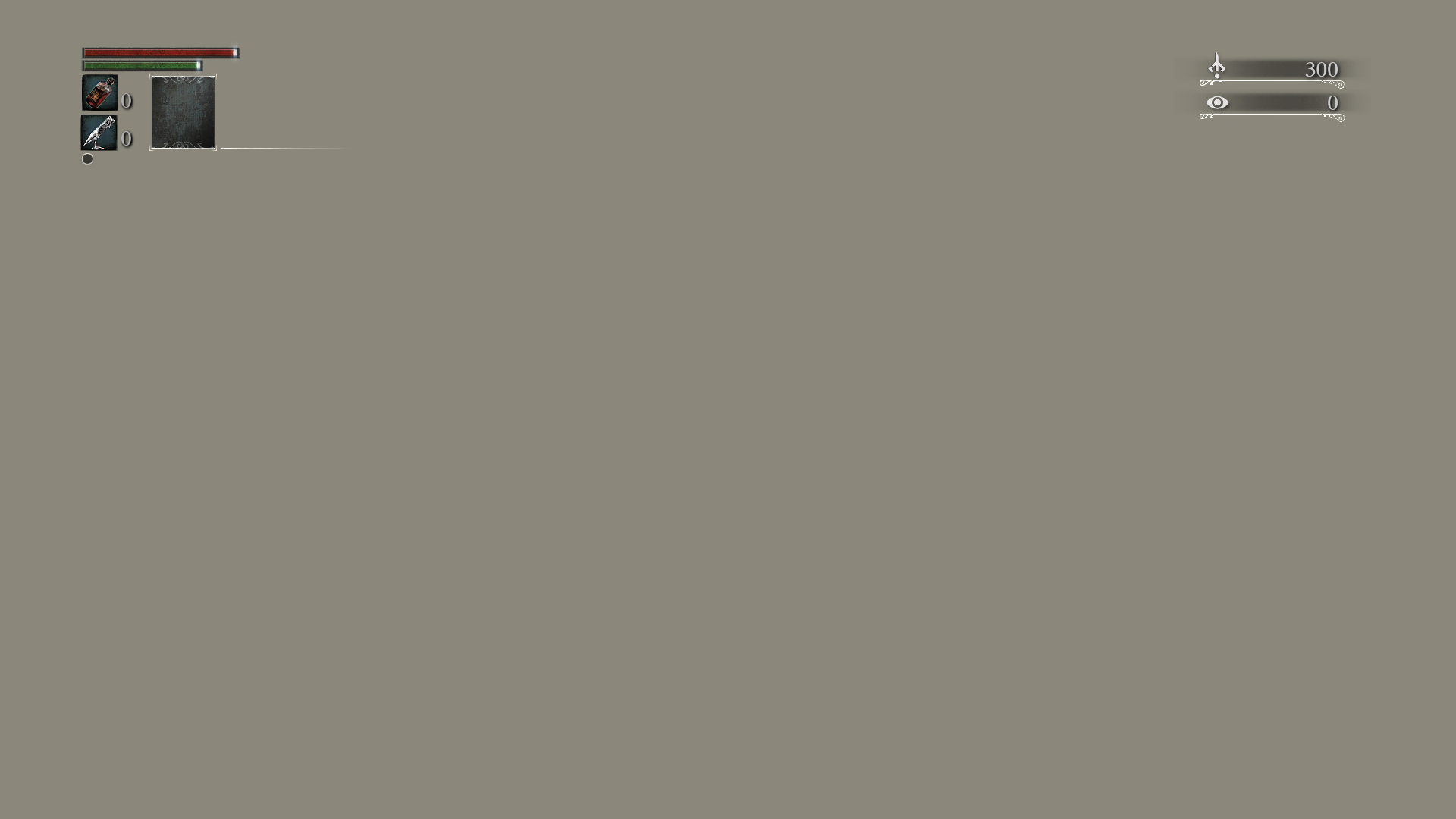
12 Nov, ~15:02The first clinic frame: the HUD over a grey world (local run)12 November, about 15:02 (local run): the first frame in Iosefka's Clinic. The HUD draws, but the world behind it is a flat grey. This run fed the GPU one submission at a time, a local debugging setting, because run normally the boots hung the GPU: the renderer fell so far behind that the game's per-frame GPU memory rings ran out and the game wrote empty pointers into work still to run. That was fixed on merged main by limiting submissions to four buffers ahead (#743) and by memory range checks that stop by name instead of hanging (#731).
12 Nov, ~20:59Debug view: the scene in its HDR target (local run)12 November, about 20:59 (local run). A debug view of an internal render target, not a frame the game shows: the renderer's own copy of the clinic's high-dynamic-range scene target, written to an image with a debug tone curve. It proved the scene itself draws and is lit; the grey of the frame before was missing post-processing. The cause: the YEBIS middleware's post passes, which tone-map the scene for the screen, use indexed draws written by a GPU-library function the renderer did not observe (#761).
12 Nov, ~20:59Debug view: the G-buffer's surface colours (local run)Same run. A debug view of an internal render target: the G-buffer's albedo target, the surface colour of every pixel before any light is applied, written out by the renderer. The materials and textures of the clinic arrive intact.
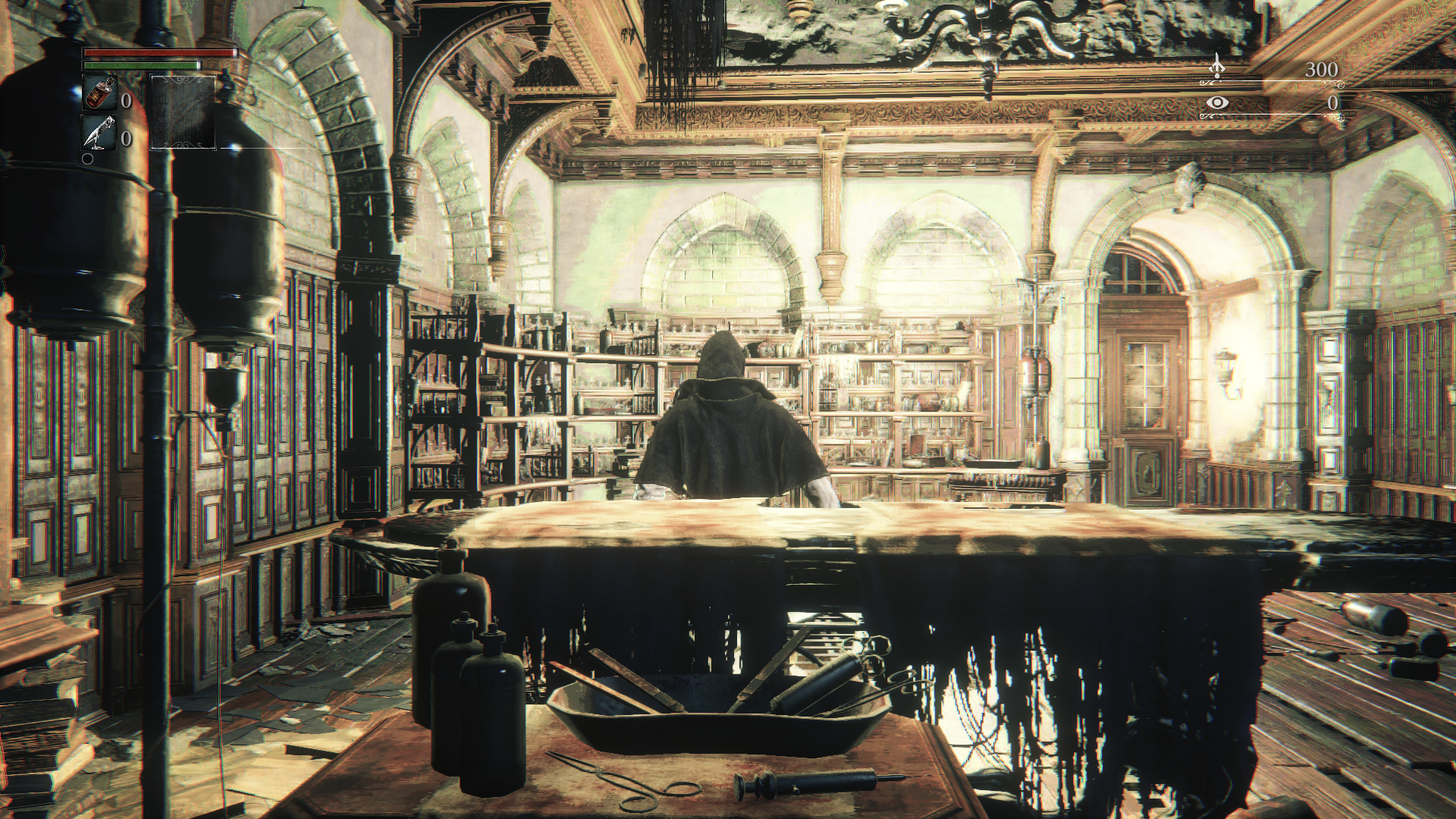
13 Nov, ~00:06Through the game's own post chain, too bright (local run)13 November, about 00:06 (local run): the clinic through the game's own post-processing, with the post chain's draws (#761), its null image descriptors and compute writes over targets (#765, both merged on 13 November) and its memory reuse (#771, then in review, since merged) applied. The picture is about eight times too bright compared with a reference capture of the same scene.
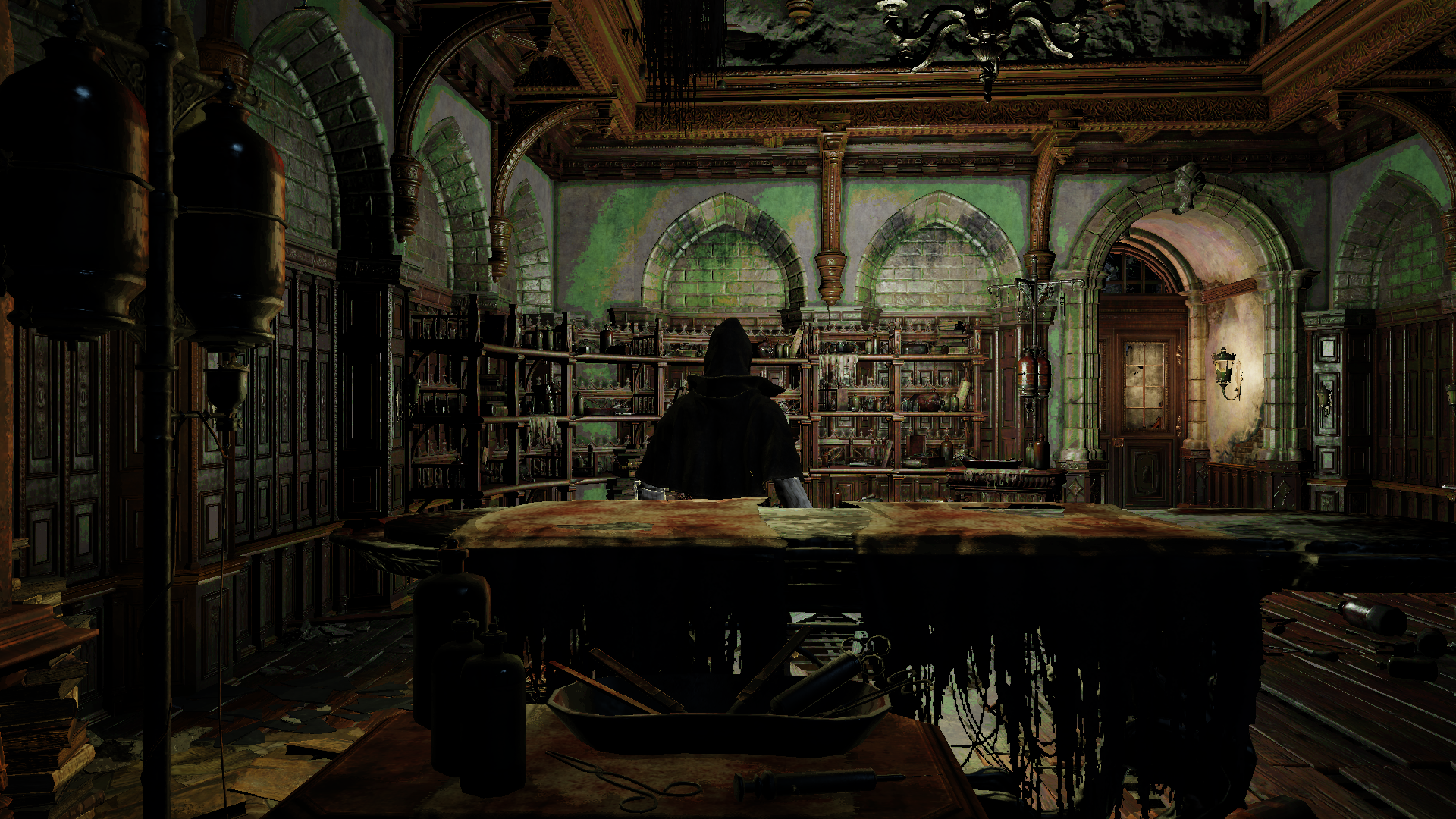
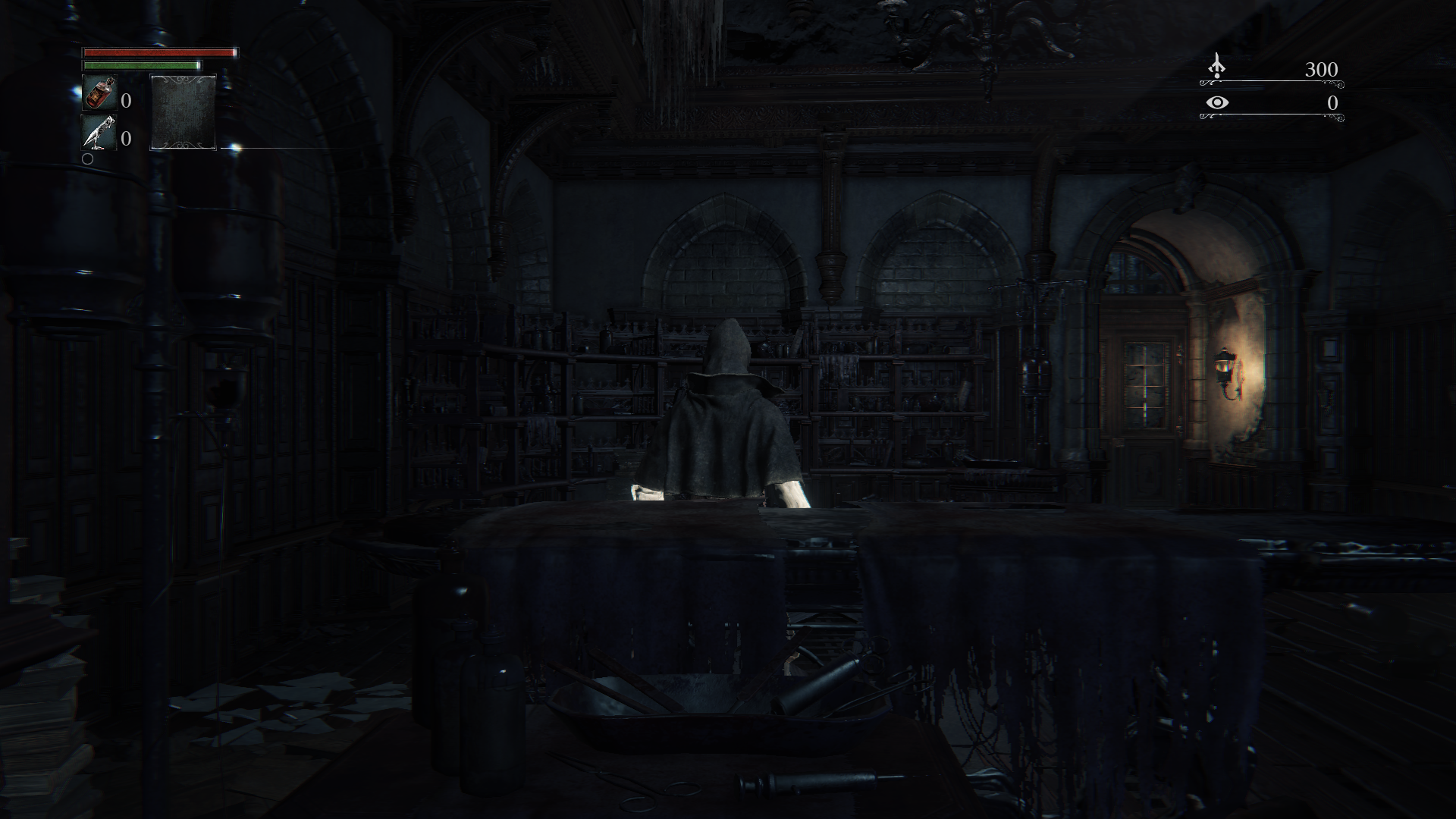
13 Nov, ~07:50Iosefka's Clinic at the right brightness (local run)13 November, about 07:50 (local run): the clinic at the brightness of a reference capture. The game draws each deferred light as a full-screen quad once per 128x128 screen tile, with the tile set as the viewport scissor; the renderer did not apply that scissor, so each tile's draw lit the whole screen. #807 (then in review, merged 13 November) applies it, together with #771 (then in review, merged 13 November). The clinic drew at seconds per frame in these runs; on 13 November a local run measured about 6 frames a second (#830), so it is not playable yet.
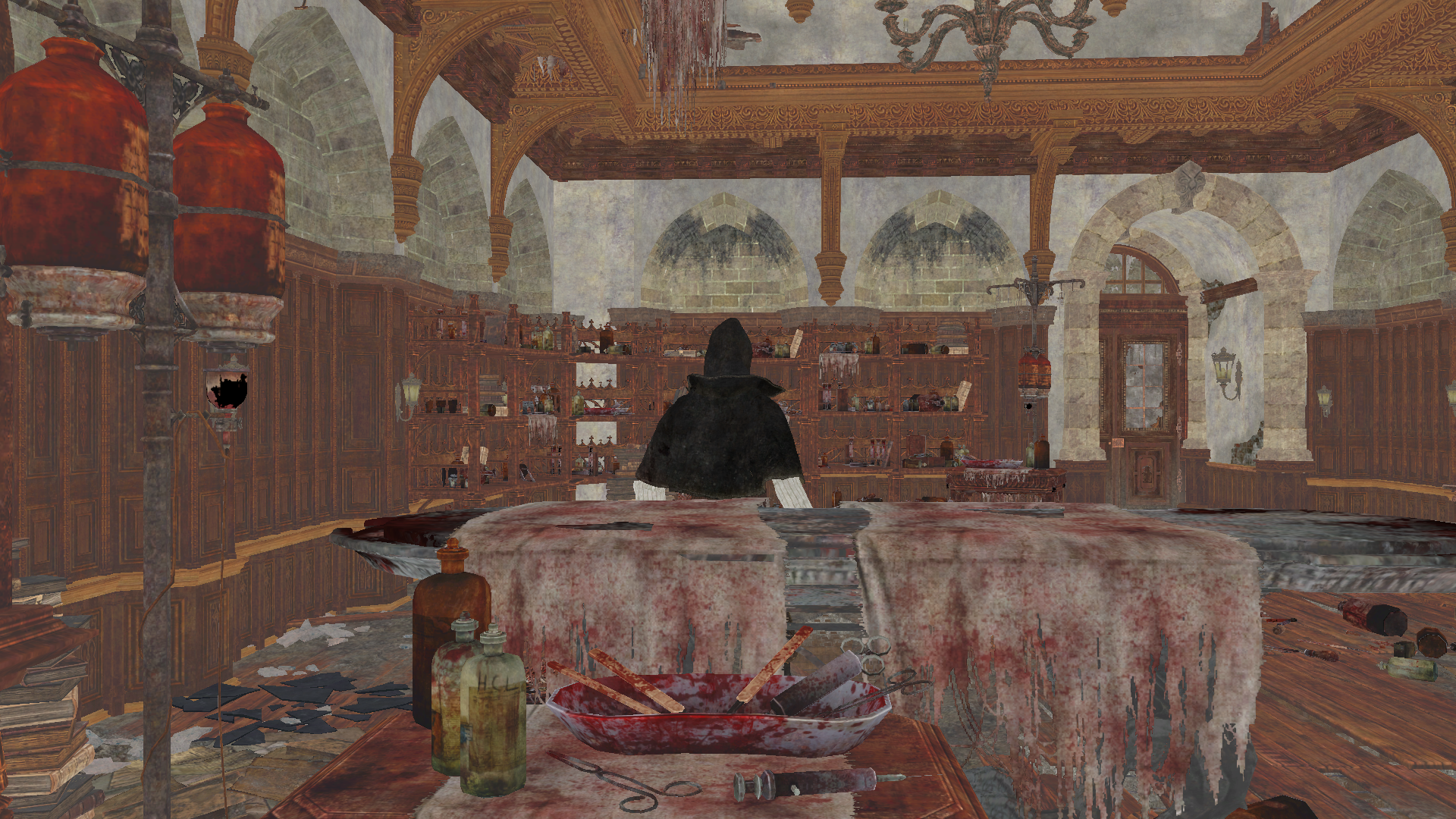
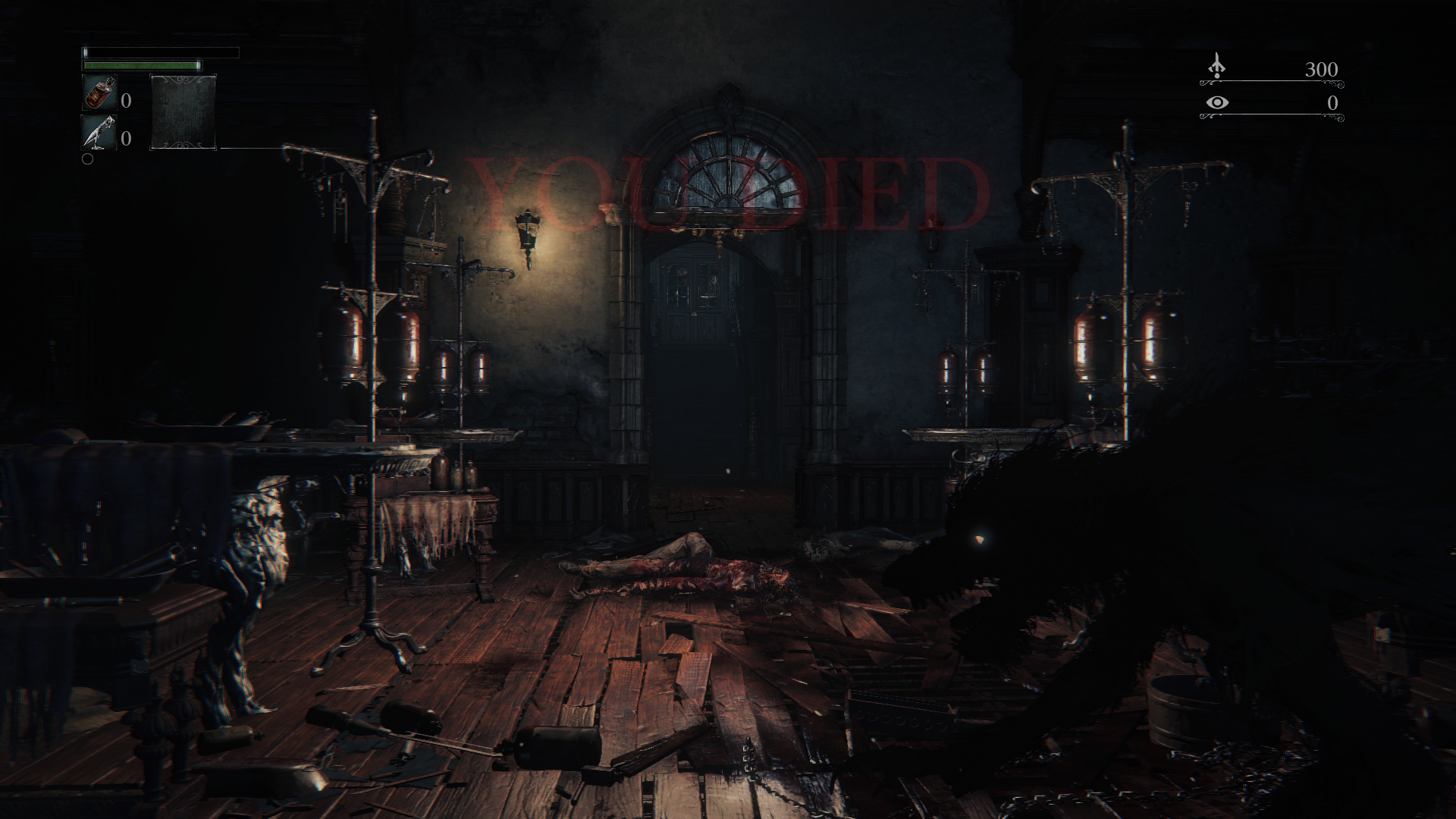
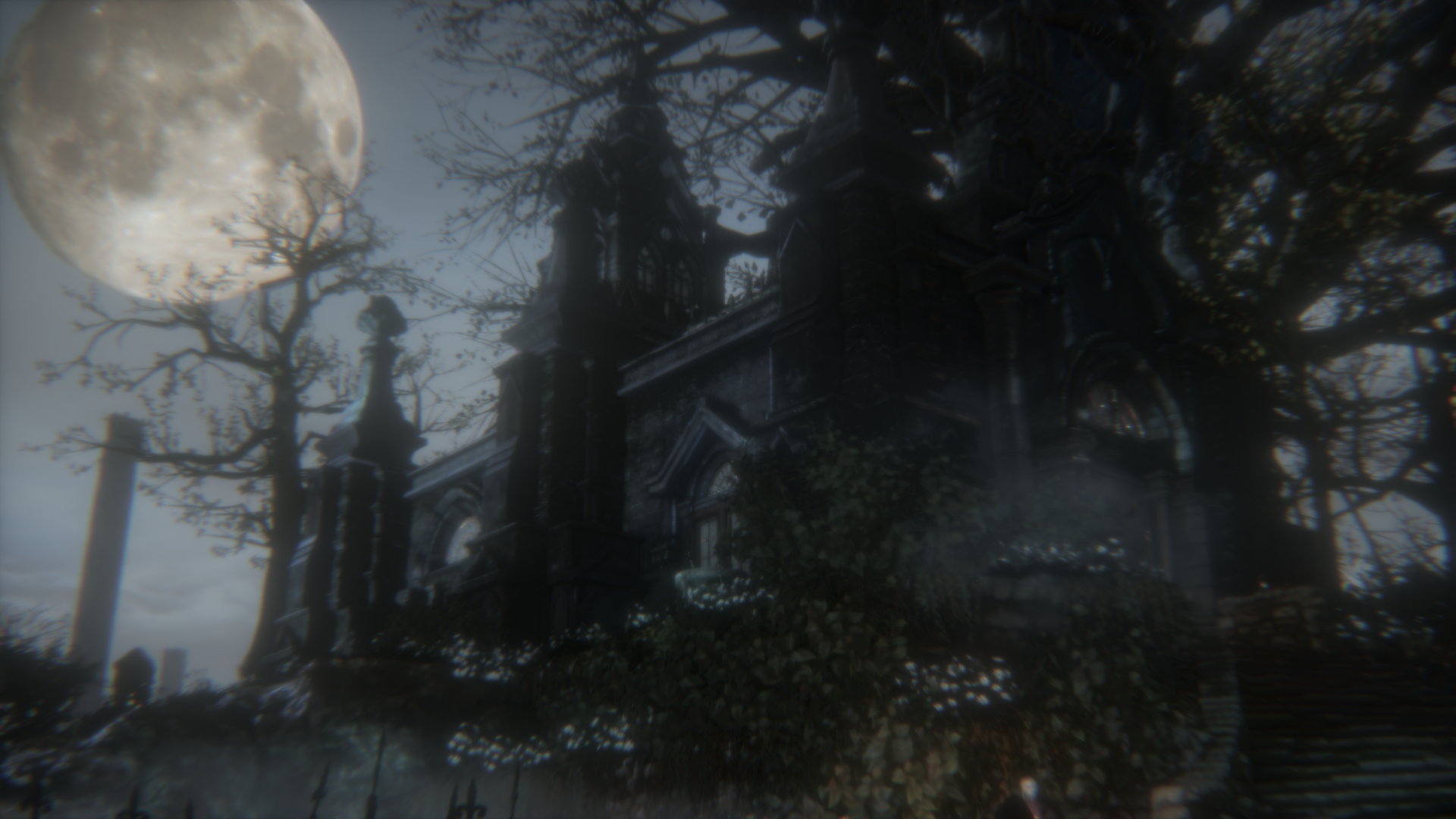
14 Nov, morningYOU DIED: the clinic's first encounter runs (local run)14 November (local run of clean main at c595e3e7, from a save at the clinic's start with a scripted controller): the hunter walks up to the first beast, its attack lands at about frame 3700, and the hunter dies at about frame 3950. The renderer fixes that let the encounter run merged the same day (#1000, #1004, #1022, #1027, #1031, #1066). The beast's side of it is on The Clinic Beast.
14 Nov, morningWaking in the Hunter's Dream (local run)Same run: after the loading screen the hunter wakes in the Hunter's Dream, the game's hub, and the scripted controller walks on (to frames 8859 and 9355 in the two boots). No stop in 900 seconds.
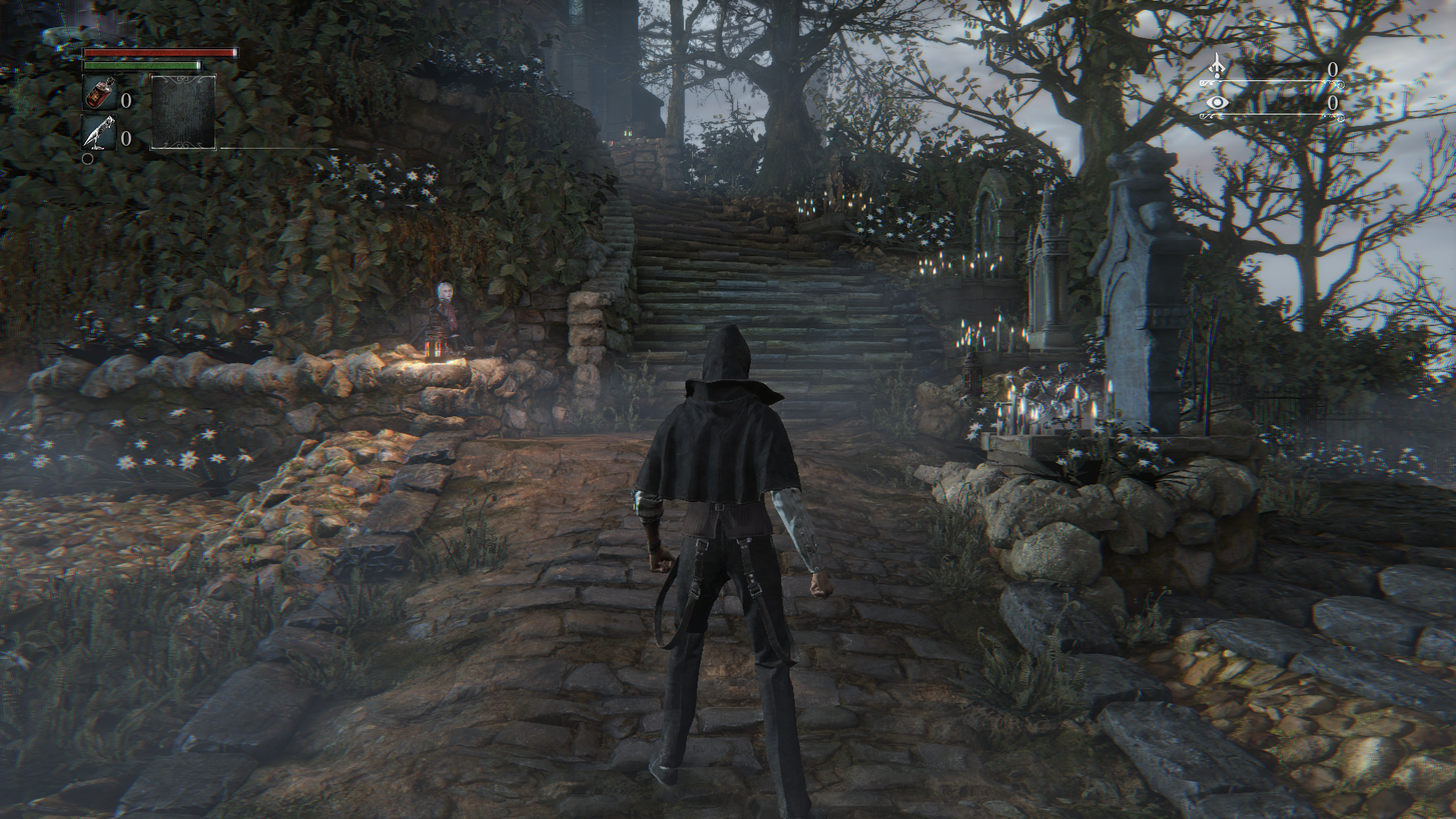
14 Nov, ~11:50Walking in the Hunter's Dream (local run)14 November, about 11:50 (local run of main at 0281b312, the revision of the saved boot record in #1082): the hunter walks up the path in the Hunter's Dream. The clinic ran at about 11 frames a second after #971, against the game's 30, so it is not playable yet. These boots start from a save and press buttons, so they are not saved records.
Later milestones (the first playable scene) are added here as they are reached.
The boot journey
Each point is one recorded boot of merged main, and its height is the furthest milestone that
boot reached. A boot is recorded with tools/boot.py after runtime changes merge. Merging code
does not move a point by itself; only a new genuine boot does.
0
Loaded
The game is in memory: its program and libraries are loaded and linked.
First reached 7 October 2026, with 19 system calls implemented by the runtime.
1
Entry
It starts running its own code.
First reached 4 November 2026, with 120 system calls implemented by the runtime.
2
Threads
It starts its worker threads: the game does many things at once.
First reached 4 November 2026, with 120 system calls implemented by the runtime.
3
Files
It reads its own files.
First reached 4 November 2026, with 120 system calls implemented by the runtime.
4
Input
It sets up the controller.
First reached 4 November 2026, with 120 system calls implemented by the runtime.
5
Audio
It starts its sound system.
First reached 4 November 2026, with 120 system calls implemented by the runtime.
6
Video out
It opens its display.
First reached 4 November 2026, with 125 system calls implemented by the runtime.
7
Gpu
It hands its first batch of drawing work to the graphics chip.
First reached 4 November 2026, with 149 system calls implemented by the runtime.
8
First flip
It finishes its first frame and asks the screen to show it.
First reached 4 November 2026, with 149 system calls implemented by the runtime.
What the screen shows
Reaching first flip means the game finished a frame and asked the screen to show it. Paleblood
can show the frames, in a window or as captured images (#313), and since 6 November 2026 its
own renderer draws them: in the maintainer's local runs with the display on, the boot shows the
studio logos and reaches the title screen (#441, #442), and with scripted input
(#447) and pull requests that were then still in review it gets past the title to the main menu and the
first settings screens, the opening cinematic and character creation (above). The saved boot records above run with the display off and no
input, so they do not show this. The renderer's phases are on the
Runtime page.